UK:
UK: 
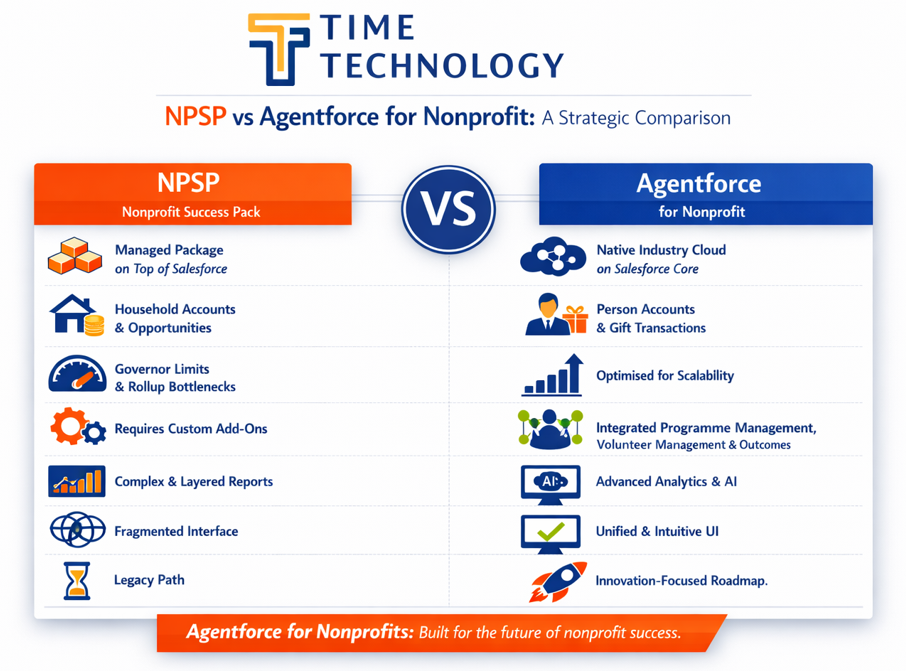
For many organisations, the question of migrating from NPSP to Agentforce Nonprofit (formerly Nonprofit Cloud) can feel like a unique challenge – a special case that requires its own bespoke thinking. In reality, the move from NPSP to Agentforce Nonprofit is not fundamentally different from migrating from any other CRM platform, whether that’s Raiser’s Edge, HubSpot, CiviCRM, Donorfy or something else entirely.
This is because Agentforce Nonprofit is not an “upgrade” to NPSP. It is a new architecture, built on different data structures, different automation patterns, and a different philosophy of how nonprofit CRM should work. Whether you are coming from NPSP or a third‑party system, the underlying task is the same: designing a modern, future‑ready CRM that aligns with how your organisation needs to operate today and tomorrow.
Viewed this way, the first question is not “How do we migrate?” but “Is our current CRM still fit for purpose?”
Why long-term CRM use almost always leads to the need for a refresh
Across the sector, we see the same pattern:
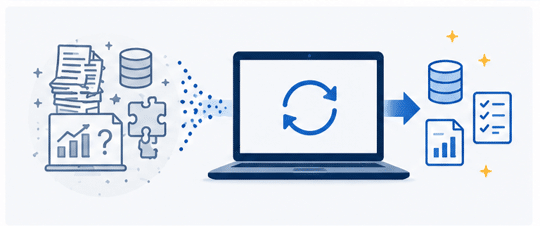
After five to ten years of using any CRM, organisations tend to accumulate:
- Custom objects
- Bespoke automation
- Workarounds
- Legacy integrations
- Reports built for people who left years ago
- Processes designed for “how things worked back then”
Over time, the CRM becomes:
- Top-heavy
- Difficult to maintain
- Expensive to update
- Misaligned with current needs
This is not a criticism — it is simply the natural lifecycle of a CRM in a dynamic organisation.
By the time a nonprofit has been on a system for a decade, the deviation from out-of-the-box functionality is often so significant that a full refresh is required anyway, even if the underlying platform were not changing.
Seen through this lens, the move to Agentforce Nonprofit is not an inconvenience — it is an opportunity to reset, simplify, and modernise.
If your CRM is dated and you have valid reasons to consider a refresh, it is also the ideal time to review your processes.
Why process review is not optional
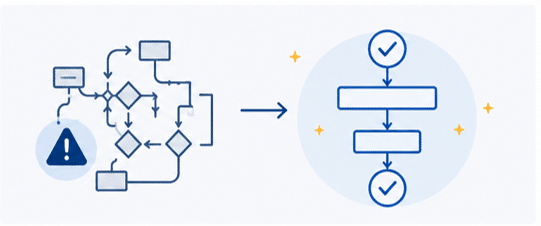
Technically, it is possible to migrate from NPSP to Agentforce Nonprofit without reviewing or redesigning your processes. But practically — and strategically — this is almost never the right approach.
A CRM migration is one of the few moments in an organisation’s lifecycle where you have the opportunity to:
- Challenge legacy ways of working
- Remove unnecessary steps
- Simplify user journeys
- Align teams around a shared operating model
- Design processes that reflect the organisation you want to be, not the one you used to be
Skipping this step may feel like a shortcut, but it almost always leads to recreating old problems on a new platform. The result is a modern system constrained by outdated processes — the worst of both worlds.
The reality is that nonprofits should be using this moment to review and optimise processes, not because Salesforce is changing its product, but because the organisation deserves a CRM that supports its future, not its past.
Once you’ve established where you want to go, the next question is how to get there. There are several migration approaches, each with its own advantages and trade-offs.
Three migration pathways - with pros and cons
With these concepts in mind, the migration pathways look slightly different.
1. New build (the clean-slate approach)
This is the closest thing to a “best practice” migration, whether you are coming from NPSP or any other CRM.
It allows you to:
- Adopt Agentforce Nonprofit’s native data model
- Redesign processes for the future
- Migrate only what is fit for purpose
- Avoid carrying legacy complexity into your new system
Pros
- Cleanest long‑term architecture
- Eliminates technical debt
- Enables full process redesign
- Simplifies future maintenance and enhancements
- Aligns fully with Salesforce’s strategic direction
Cons
- Highest upfront effort and investment
- Requires more organisational change
- Longer implementation timeline
- May require more intensive data preparation
2. Hybrid migration (the pragmatic middle ground)
This is becoming the most common approach — but it is often misunderstood.
Key clarification:
Hybrid migration does not mean enabling AFNP inside your existing NPSP org.
AFNP always lives in a new Salesforce org.
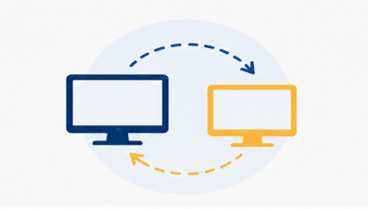
Hybrid migration means:
- Operating NPSP and AFNP side‑by‑side for a period
- Transitioning processes, teams, and data in phases
- Gradually retiring NPSP as AFNP becomes the system of record
This approach acknowledges a reality. Some organisations need to move gradually, especially if they have:
- Usable NPSP data
- Integrations that cannot be rebuilt immediately
- Limited internal capacity
- Dependencies that require phasing
Pros
- Lower immediate disruption
- Allows phased adoption and training
- Reduces risk by avoiding a single “big bang” cutover
- Enables early value from AFNP components
- Supports complex integration landscapes
Cons
- Requires operating two systems temporarily
- More complex governance and data management
- Longer overall transition period
- Potential for temporary duplication of effort
3. Stabilise now, migrate later (the "not yet" option)
For some organisations, the right answer is not to migrate immediately. But even in this scenario, the work is not wasted.
Stabilising NPSP, simplifying customisations, and improving data quality all contribute to a smoother migration later — and improve the CRM you have today.
Pros
- Lower immediate cost and disruption
- Allows time to build internal readiness
- Improves the current CRM regardless of migration timing
- Reduces technical debt ahead of future migration
Cons
- Delays access to AFNP’s modern capabilities
- May require maintaining legacy customisations longer
- Risk of deferring necessary change
- Potential for duplicated effort if stabilisation work is extensive
A migration is not a technical task — it is a strategic moment.
The shift to Agentforce Nonprofit is not simply a matter of mapping objects or moving data. It is a moment to:
- Rethink how your organisation engages supporters
- Modernise programme and volunteer management
- Align fundraising with finance
- Simplify automation
- Reduce technical debt
- Design a CRM that will last the next decade
Whether you migrate now or later, the most important thing is to approach the decision with clarity and intention.
Closing thought
The move to Agentforce Nonprofit is not just about technology. It is about giving your organisation the chance to step back, reassess, and build a CRM that truly supports your mission. Whether you are coming from NPSP or any other platform, the principles are the same: design for the future, not the past.