UK:
UK: 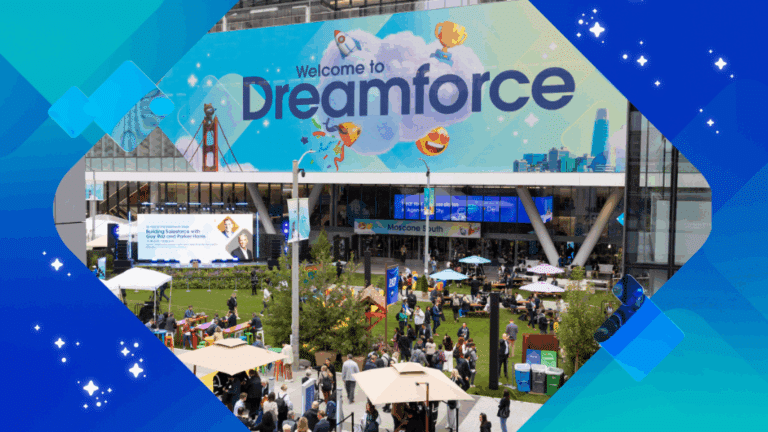
The biggest event in Salesforce’s calendar, Dreamforce, took place back in October. The annual event always brings a number of exciting highlights, and this year was no different. For those of us in the UK who could not make it to San Francisco, Salesforce brought Dreamforce distilled to us at Agentforce World Tour London. Time Technology was able to attend that event at the beginning of December, and we are happy to share our highlights from those two events.
Dreamforce and World Tour London 2025 provided insights into the ever-evolving landscape of Salesforce in the era of AI. A key focus was placed on how Nonprofit work itself is changing, and how technology is being positioned to help organisations do more with limited capacity.
Between keynotes, demos, and insights into Salesforce’s roadmap, it can sometimes be hard to tell what’s genuinely important – especially for Nonprofit Admins who are already juggling fundraising systems, reporting, and day-to-day support for stretched teams. So, with our Nonprofit Admins in mind, below are the biggest takeaways from Dreamforce and World Tour London 2025, grounded in the Nonprofit Keynote and supporting sessions available to re-watch on Salesforce+.
AI Has Moved from “Experiment” to “Everyday Tool”
A central theme across the main and Nonprofit Keynotes was the shift toward what Salesforce calls agentic AI – AI that works alongside people, as intelligent “agents” to reason, access tools, and take actions independently for active task execution.
For Nonprofits, this showed up in Salesforce’s decision to unveil a new iteration of Nonprofit Cloud, which is now known as Agentforce Nonprofit. This signals that AI is now considered a core part of how nonprofits operate.
Salesforce shared that over 50% of nonprofits are now using or piloting AI. That change reflects real pressure in the sector regarding resourcing – from rising service demand to limited funding, and growing workloads.
What this means for Nonprofit Admins
AI is no longer being positioned as a “nice to have” or future idea. The platform roadmap assumes AI will increasingly support:
- Fundraising activities
- Program and service delivery
- Volunteer coordination
- Reporting
For Admins, the main takeaway here is about understanding how these tools fit into existing processes and helping teams adopt them in a way that actually reduces workload.
Salesforce Is Consolidating Around a Single Nonprofit Platform
Another clear message from the Nonprofit sessions was consolidation.
Salesforce is increasingly positioning Agentforce Nonprofit (previously NPC) as a unified platform for managing fundraising, programmes, volunteers, and outcomes – rather than a collection of connected tools.
This reflects a broader shift away from heavily bespoke implementations toward shared data models and common patterns that can support automation and AI more effectively.
What this means for Nonprofit Admins
Many Nonprofit Orgs have grown organically over time, with custom objects, workarounds, and integrations added as needs emerged.
Dreamforce 2025 suggests Salesforce is nudging organisations toward:
- Clearer sources of truth
- Fewer disconnected systems
- More alignment with standard models
That doesn’t mean every Org needs to rebuild overnight – but it does mean admins may increasingly be asked to weigh short-term flexibility against long-term maintainability and access to new capabilities.
AI Is Being Applied to Very Specific Nonprofit Pain Points
Rather than talking about AI in abstract terms, Salesforce focused on practical use cases that map closely to common Nonprofit challenges:
- Raising funds
- Managing workload
- Meeting increasing service demand
In the Nonprofit Keynote, Salesforce highlighted AI agents designed to support areas like:
- Prospect research for fundraising
- Administrative work tied to participants or clients
- Volunteer capacity and coverage
Salesforce also shared examples of organisations seeing significant efficiency gains – not by replacing people, but by reducing the time spent on repetitive, manual tasks.
What this means for Nonprofit Admins
This is an important reframing.
AI isn’t being pitched as a replacement for frontline staff or fundraisers. It’s being positioned as a way to:
- Shorten turnaround times
- Reduce manual admin
- Give teams more space to focus on mission-driven work
Admins will play a key role in deciding where automation makes sense – and where human judgment should remain front and centre.
Data Quality Has Become Mission-Critical
Sessions like Taming Data Chaos: When Your Mission Outgrows Systems reinforced a message that came up repeatedly: AI is only as useful as the data behind it.
Disconnected systems, inconsistent records, and unclear ownership make it harder to take advantage of automation – and harder to trust the results when you do.
What this means for Nonprofit Admins
This isn’t about perfect data or massive clean-up projects.
It’s about being intentional:
- Knowing which data is authoritative
- Understanding where gaps exist
- Resisting the temptation to layer new tools on top of unresolved issues
As AI becomes more embedded in everyday work, data stewardship becomes even more central to the Admin role.
Trust and Governance Are Not Optional
Salesforce was explicit in acknowledging that Nonprofits manage highly sensitive data – about donors, volunteers, and beneficiaries.
Sessions focused on trust and transformation made it clear that successful AI adoption depends on transparency, governance, and clear boundaries around how tools are used.
What this means for Nonprofit Admins
Admins are already responsible for access, visibility, and data protection. With AI in the mix, that responsibility expands to include:
- Understanding how AI tools interact with data
- Defining who can use them and when
- Helping users feel confident that automation is supporting their work, and not undermining it
Trust isn’t something to bolt on later. Dreamforce and World Tour London 2025 made that clear.
Nonprofits Are Part of Salesforce’s Long-Term Strategy
One reassuring signal from Dreamforce and World Tour London 2025 was the visibility of nonprofits across the event.
The Nonprofit Keynote stood on its own, Nonprofit Leaders appeared in broader keynote content, and customer stories were integrated into the main narrative – not treated as edge cases.
What this means for Nonprofit Admins
Nonprofits are not an afterthought in Salesforce’s AI and platform strategy.
For admins, that reinforces the value of:
- Staying engaged with platform changes
- Building skills aligned with Salesforce’s roadmap
- Helping organisations adopt new capabilities at a pace that makes sense
Bringing It All Together
Dreamforce and London World Tour 2025 didn’t suggest that nonprofits need to change everything tomorrow.
But it did highlight a few clear shifts:
- AI is becoming part of everyday Nonprofit work
- Platform consolidation is accelerating
- Data quality underpins everything else
- Trust and governance are essential
- Nonprofits are firmly part of Salesforce’s roadmap
For Nonprofit Admins, this isn’t about chasing every new feature. It’s about understanding the direction of travel – and helping organisations move forward in a way that’s sustainable, ethical, and aligned with their mission.
Want to Explore Further?
All of the themes above are explored in more detail in Dreamforce 2025 sessions available on Salesforce+, including:
- Dreamforce 2025 Main Keynote
- Nonprofit Keynote: Scale Impact in the Age of AI
- Key Takeaways from the Nonprofit Keynote
- Taming Data Chaos: When Your Mission Outgrows Systems